Ref. No. 180
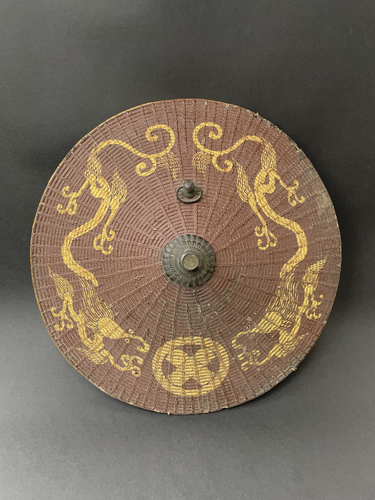
Jingasa with Rain Dragons
| Origin | Japan |
|---|---|
| Period | 19th century |
| Dimensions |
Diameter39.5 cm / 15 35⁄64 in
|
| Condition | Very Good |
Provenance
- Private French collection
Short Description
The jingasa, literally "camp hat", first appeared on the battlefields of the Sengoku period as an inexpensive, mass-produced alternative to the kabuto, worn by the ashigaru foot soldiers who could not afford a full helmet. During the long peace of the Edo period its role changed. Samurai now wore the jingasa on official outings, and its form, colour and decoration came to express the wearer's rank and household. Besides iron, leather and moulded paper, jingasa were also made of fine woven work, stiffened and sealed with layers of lacquer, a construction found on eighteenth-century examples in Japanese museum collections. The quality of the weaving and the lacquer made these hats as much an expression of the owner's taste as of his station.
Compare:
Jingasa, Japan, Edo period, 18th century, woven bamboo with lacquered paper and brown lacquer, Kyoto National Museum, inv. no. E25