Tap to Zoom
Ref. No. 563
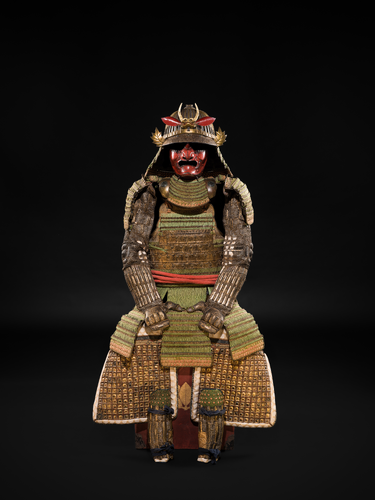
Japanese Armour of Okegawa nimai-do gusoku type with a so-fukurin sujibachi kabuto
| Origin | Japan |
|---|---|
| Period | Edo period (17th–18th century) |
| Medium | Iron, lacquer (gilt, red, brown, and hiramaki-e), gilt-copper, mixed metals (shakud?), gilded leather, and silk brocade. |
| Condition | Very Good |
Price
Available on Request
Provenance
- Private collection, the Netherlands
About This Work
The armour is predominantly gilt-lacquered, laced in green and orange, and mounted on fine beige and gold silk brocade, fitted throughout with kanamono of kiku (chrysanthemum), hanabishi, sakura, and katabami design, together with a mon in the form of a yahazu juji (notched-end cross).
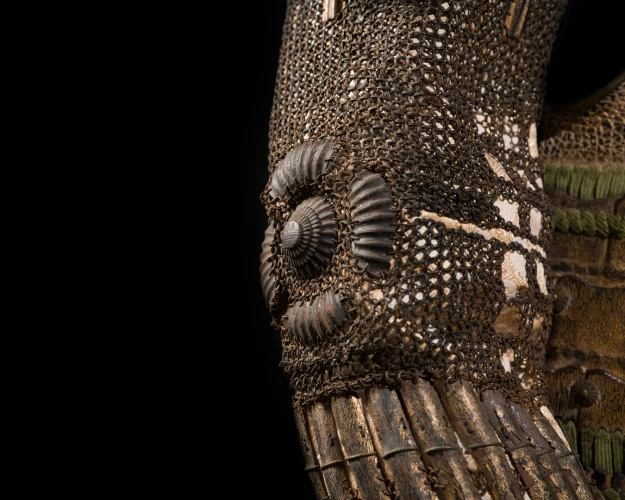
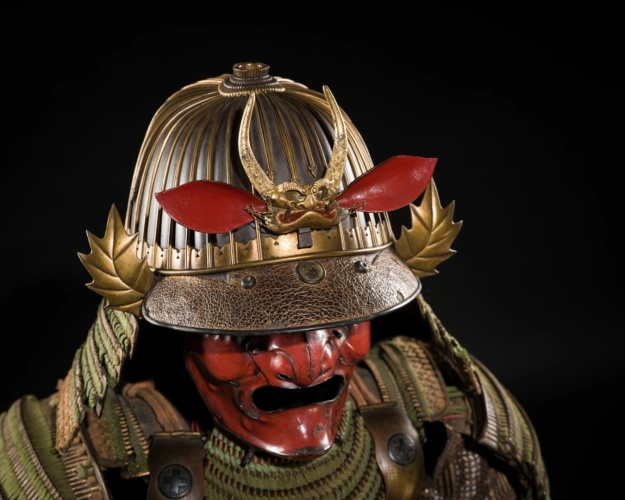
The kabuto is a brown-lacquered thirty-two-plate iron bowl with raised ridges, surmounted by a five-stage mixed-metal tehen kanamono issuing shinodare, fitted with gilt-copper so-fukurin and pierced igaki, the mabisashi applied with gilded leather centred by an embossed inscription reading - Hachiman - flanked by kiku medallions, the brim further fitted with a gilt-lacquered maedate in the form of an oni with curling horns and red-lacquered ears, above a five-lame jikoro. The menpo is red-lacquered iron with a removable nose plate, deeply embossed features, and ase-nagashi at the chin, fitted with a four-lame yodarekake. The do, sode, kote, tekko, and suneate share a consistent textured lacquer surface throughout, the do constructed of okegawa (barrel-form) plates studded with kiku-form embosses, comprising seven sections of five-lame kusazuri, the watagami of checkered design applied with the yahazu juji mon in shakudo against a ring-punched ground. This consistency of surface treatment across every lacquered component points to a single, coherently conceived armour rather than a later, composite assembly.
The accompanying red-lacquered storage box (yoroibako) bears the character - mae- (“front”) in gold hiramaki-e to one side, the remaining three sides decorated with a leaf-form crest.